Begin with the job, not the adjective
“Natural,” “premium” and “innovative” describe a marketing position more readily than a working requirement. A material choice becomes clearer when the job is specific: carry a load across a thin span, resist repeated cleaning, insulate a grip or let a radio signal pass. The same material can be sensible in one location and troublesome in another.
Nordic design histories include wood, glass, ceramics, metals and industrial polymers. Iittala and Arabia make useful starting points for studying domestic glass and ceramics, while Fiskars offers familiar examples of tool handles and material combinations. These precedents are not proof of universal superiority. Ask what each material contributes to a particular component and what production, maintenance or recovery conditions accompany that contribution.
Let timber remain a moving material
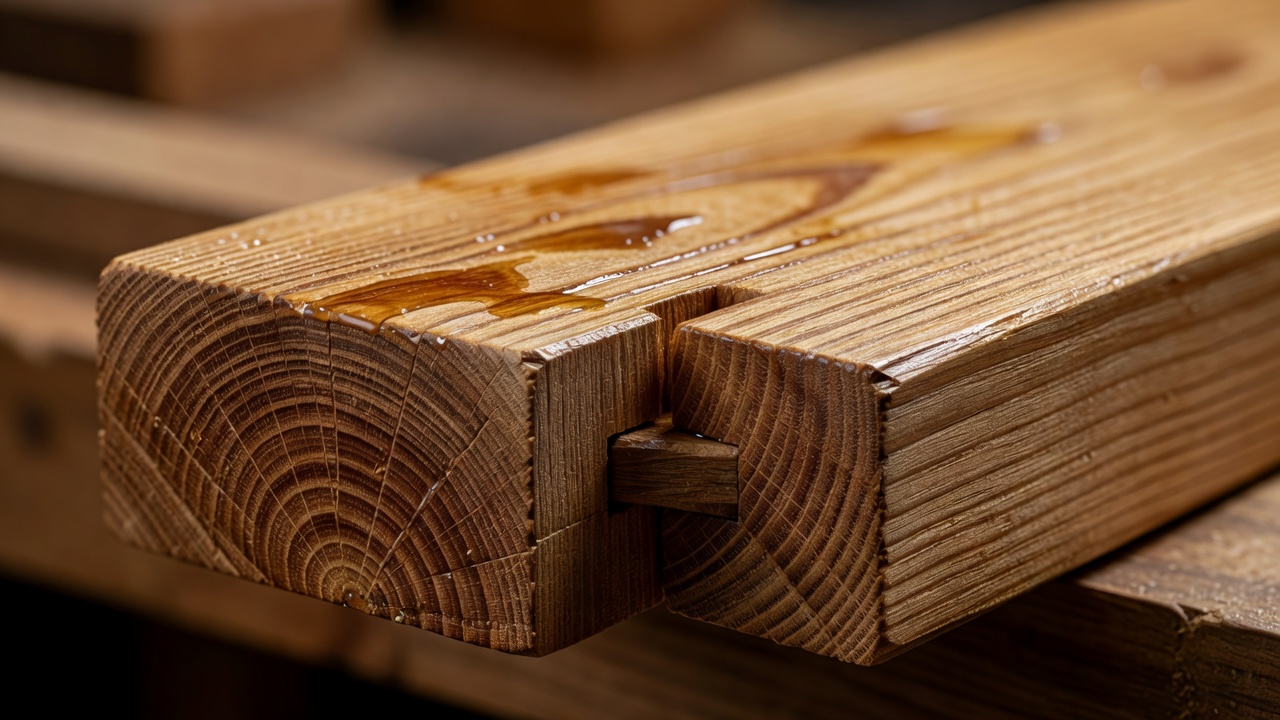
Solid timber has direction. Grain influences strength, machining and dimensional change. A broad board can move across its width as humidity changes; a connection that restrains that movement may create stress. Plywood reorganises timber into bonded layers, offering different opportunities and introducing its own adhesive and edge-detail questions.
Finish is part of the system. Oil, lacquer and other coatings alter feel, stain resistance and maintenance. “Repairable wood” is not enough information if a factory finish is difficult to match or an edge veneer is too thin to sand safely. Look for care guidance that explains what can actually be renewed. A convincing material story includes the less photogenic details: water around a joint, a scratched corner and the surface after repeated wiping.
Separate surface character from performance
Brushed aluminium can appear cool and precise, yet its actual performance depends on alloy, section, treatment and assembly. A thin panel may dent. A brushed direction may make scratches more or less conspicuous. Anodising changes surface properties but does not erase the need to consider wear, edges and manufacturing tolerances.
Polymers deserve equally specific treatment. A moulded enclosure can integrate ribs, clips and tactile geometry that would require several metal parts. That integration may simplify assembly while making individual features impossible to replace. A soft coating can initially improve grip but may age differently from the substrate. Describe the polymer and finish where known; “plastic” alone is too broad to explain durability, recyclability or suitability for a particular use.
Compare the conditions, not just the samples
This qualitative table is a question-setting tool. Actual suitability depends on grade, geometry, finish, manufacturing and the use environment.
| Material approach | Potential contribution | Question to verify |
|---|---|---|
| Solid timber | Tactile structure; renewable surface in some finishes | Does the joint allow movement, and is refinishing practical? |
| Aluminium | Thin structural sections; heat spreading | What alloy, surface treatment and separation route apply? |
| Moulded thermoplastic | Complex geometry; electrical insulation in suitable grades | Can worn features be replaced without replacing the enclosure? |
| Fibre composite | Tailored stiffness and forming possibilities | Can the actual resin-and-fibre combination be recovered locally? |
Consider a small speaker: metal might suit a heat-managing part, a polymer might accommodate the antenna, and timber might supply a tactile outer element. Combining them can be reasonable. The crucial issue is how they connect. A reversible fastener may support separation, while a permanent bond may make a seemingly elegant assembly difficult to service.
Ask what the environmental claim counts
A recycled ingredient does not describe an entire product's impact. Nor does a renewable feedstock establish how an object will perform, travel or be discarded. Environmental comparisons need a defined function, service life, system boundary and credible data. ISO 14040 and ISO 14044 provide frameworks for life-cycle assessment; they do not make a particular material automatically preferable.
Likewise, an FSC claim concerns specified forest-based sourcing and chain-of-custody conditions, not every impact of the finished object. Ask for the scope of a claim and evidence relevant to the exact product. At the end of use, investigate actual collection and processing routes rather than theoretical recyclability. The strongest material decision may be the one that keeps a useful component in service, but that conclusion still depends on what maintenance and replacement require.